how-toHair Style
What Hairstyle Suits Me? The Best Hairstyle for Your Face Shape
"What hairstyle suits me?" is one of the most searched hair questions, and most answers stop at a chart of face shapes. Face shape matters, but it is only the first filter. Your hair type, how much time you spend styling, and plain personal taste decide the rest.
This guide does three things. It shows you how to find your face shape in two minutes, which cuts flatter each of the six common shapes (with a before and after for each one), and how to check the shortlist on your own face before you book the appointment. The six faces below are AI-generated example portraits, not real people; the new hairstyle on the right of each is the real output of our AI hairstyle changer for that photo.
Try it on your own photo
Pick a style, choose a photo, and press the button. The AI Hairstyle Changer opens and starts with your photo right away.
Style
Free to try — sign in after your first result.
Step 1: Find Your Face Shape in Two Minutes
Pull your hair back off your face, stand in front of a mirror or take a straight-on selfie at arm's length, and look at four things:
Length vs. width: is your face clearly longer than it is wide, or about the same?
Forehead: is it the widest part of your face, or narrower than your cheekbones?
Cheekbones: are they the widest point?
Jaw and chin: is the jaw square and angular, softly rounded, or tapering to a narrow chin?
Then match the result:
Oval: a little longer than wide, forehead slightly wider than a softly rounded jaw.
Round: about as wide as long, full cheeks, soft jawline.
Square: forehead, cheekbones and a strong, angular jaw all about the same width.
Heart: wide forehead and cheekbones, narrow or pointed chin.
Long (oblong): clearly longer than wide, with a fairly straight cheek line.
Diamond: narrow forehead, wide high cheekbones, narrow chin.
Most people are a mix of two shapes. Pick the one that describes your jaw and the length of your face best; those two decide the most.
Oval Face: Almost Anything Works
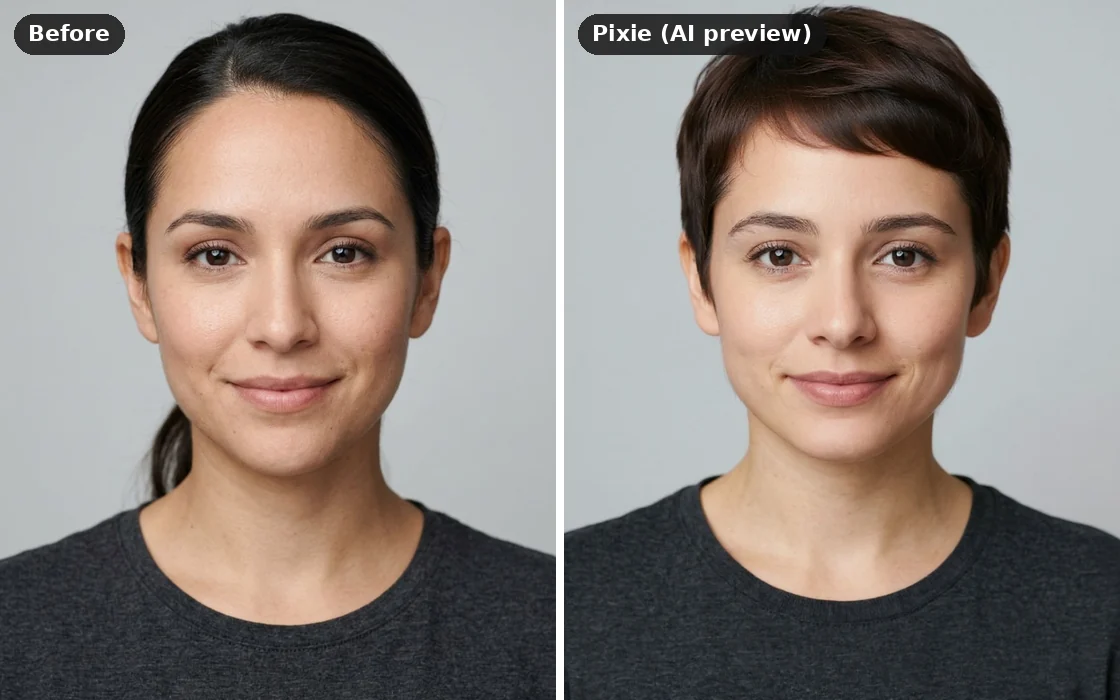
Oval faces have balanced proportions, so there is nothing for the haircut to correct. Short or long, straight or curly, with or without bangs: most styles work. That makes oval the best face shape for a bold short cut like the pixie on the right, which shows off the cheekbones and the line of the jaw.
Watch out for: very heavy, blunt bangs that cover the forehead hide the balance that makes an oval face easy to style.
Round Face: Add Length and Angles
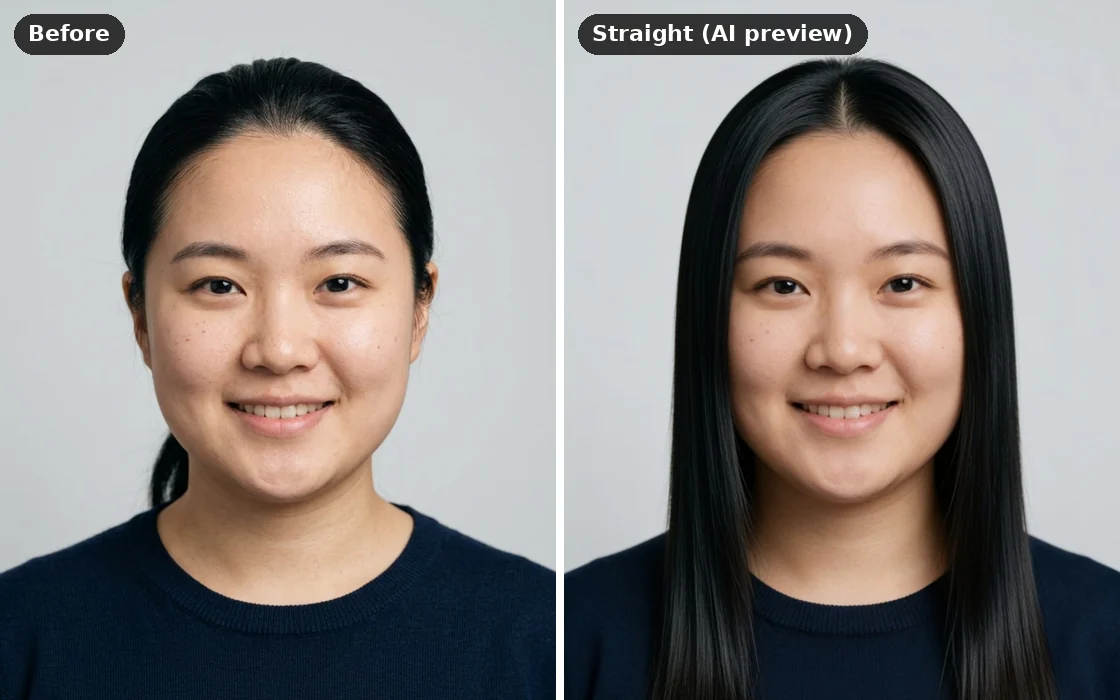
A round face is about as wide as it is long, so the goal is to make it look a little longer and more defined. Long hair that falls past the chin, long layers, a deep side part and an A-line or long bob that is longer at the front all draw the eye down. Long, straight hair (right) is the simplest version.
Watch out for: chin-length rounded bobs and full blunt bangs, which add width exactly where the face is widest.
Square Face: Soften the Corners
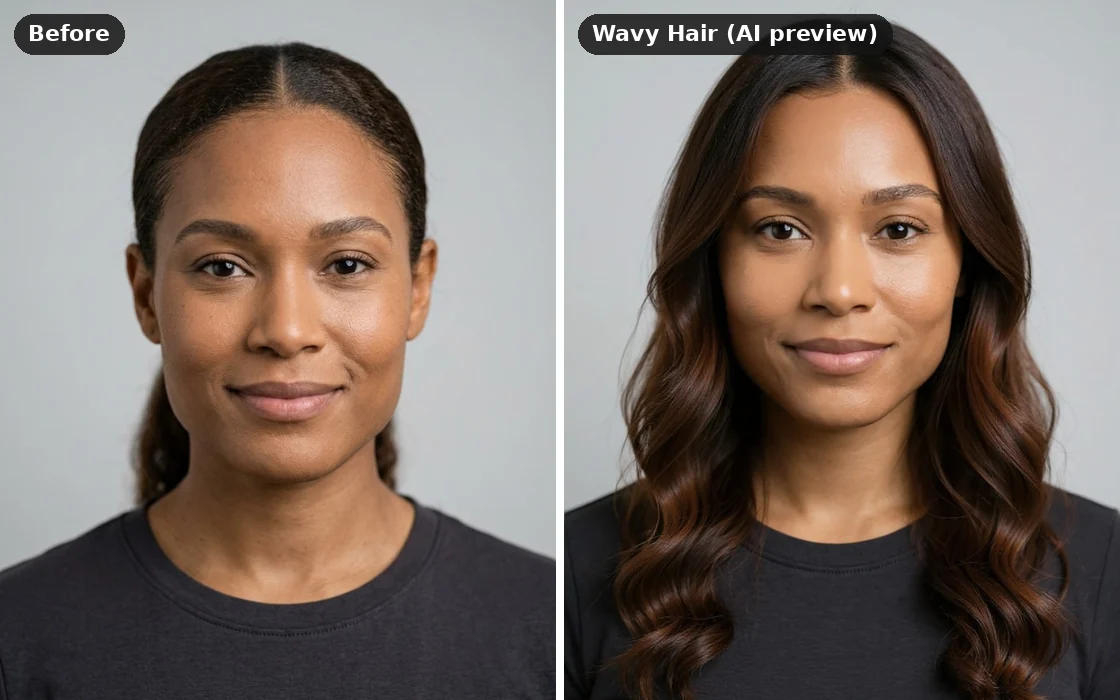
A square face has a strong, angular jaw. That is a feature, not a flaw; the aim is simply to soften the corners a little. Soft waves, layers that start around the jawline, side-swept bangs and a side part all add movement around the angles. The soft, long waves on the right are a good example.
Watch out for: blunt, one-length cuts that end exactly at the jaw, which repeat its straight line.
Heart-Shaped Face: Add Width at the Jaw
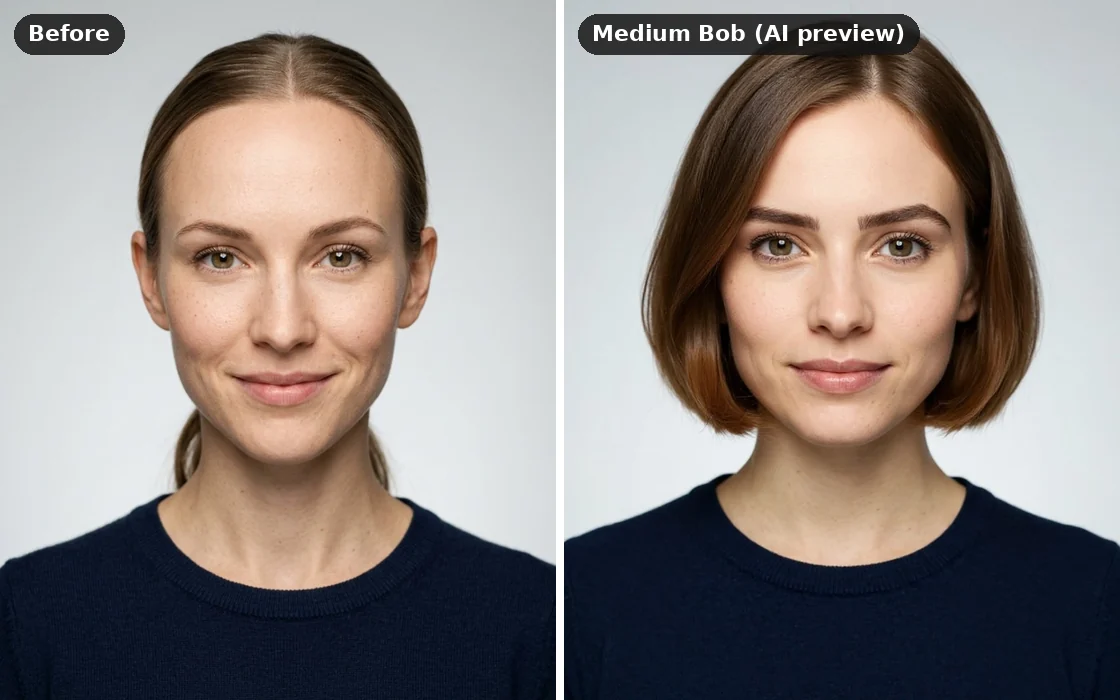
A heart-shaped face is widest at the forehead and cheekbones and narrows to the chin. Styles that add fullness at chin level balance it out: a chin-to-shoulder bob (right), side-swept bangs, or waves that start at mid-length.
Watch out for: a lot of volume at the crown and temples, or hair slicked straight back, which both make the forehead look wider.
Long (Oblong) Face: Add Width, Not Height
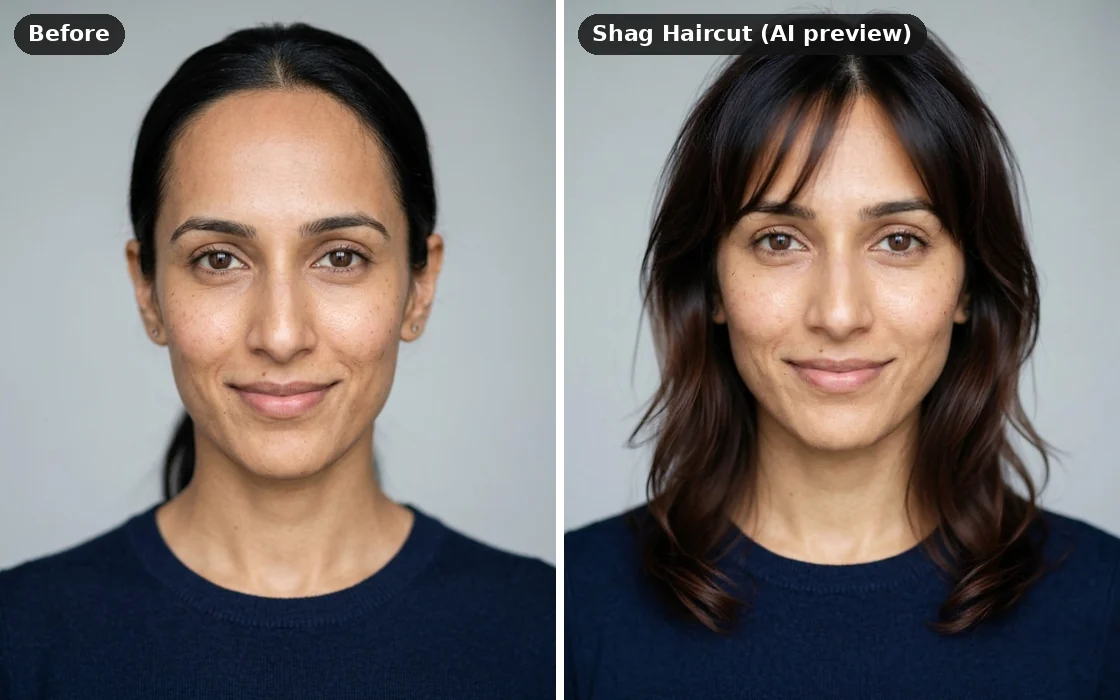
A long face is clearly longer than it is wide, so you want the haircut to add width at the sides and shorten the face a little. Bangs (curtain or full), shoulder-length cuts, and layered styles with volume at the sides all do that. The shag on the right combines all three.
Watch out for: very long, straight hair with a center part, and height on top of the head, which both make the face look longer.
Diamond Face: Balance the Cheekbones
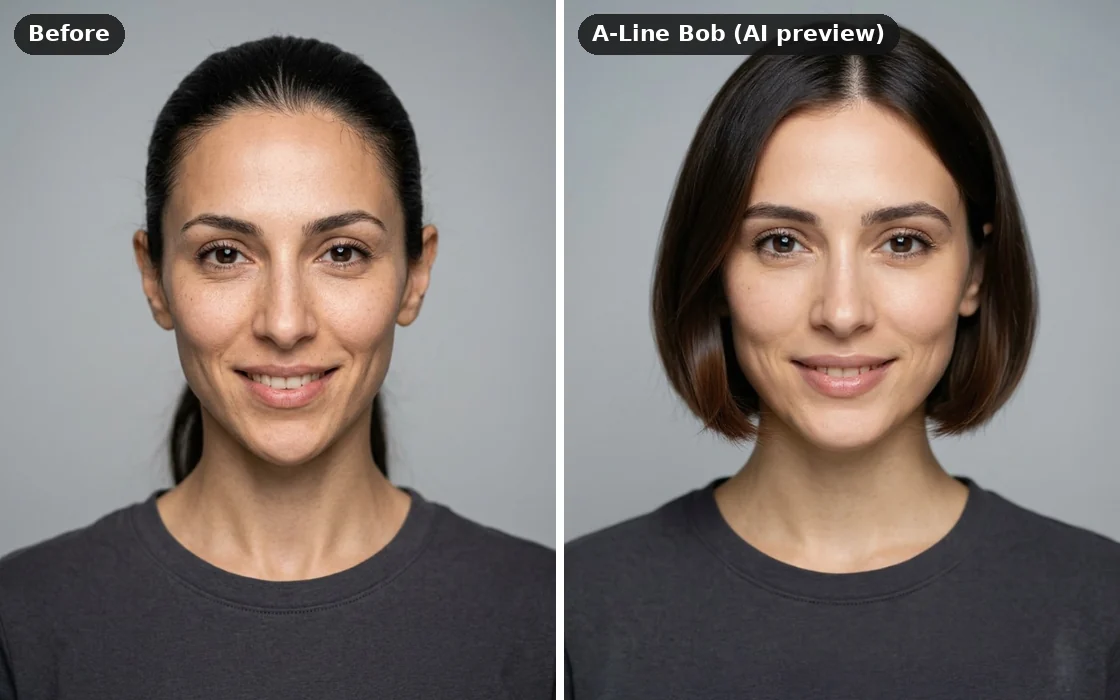
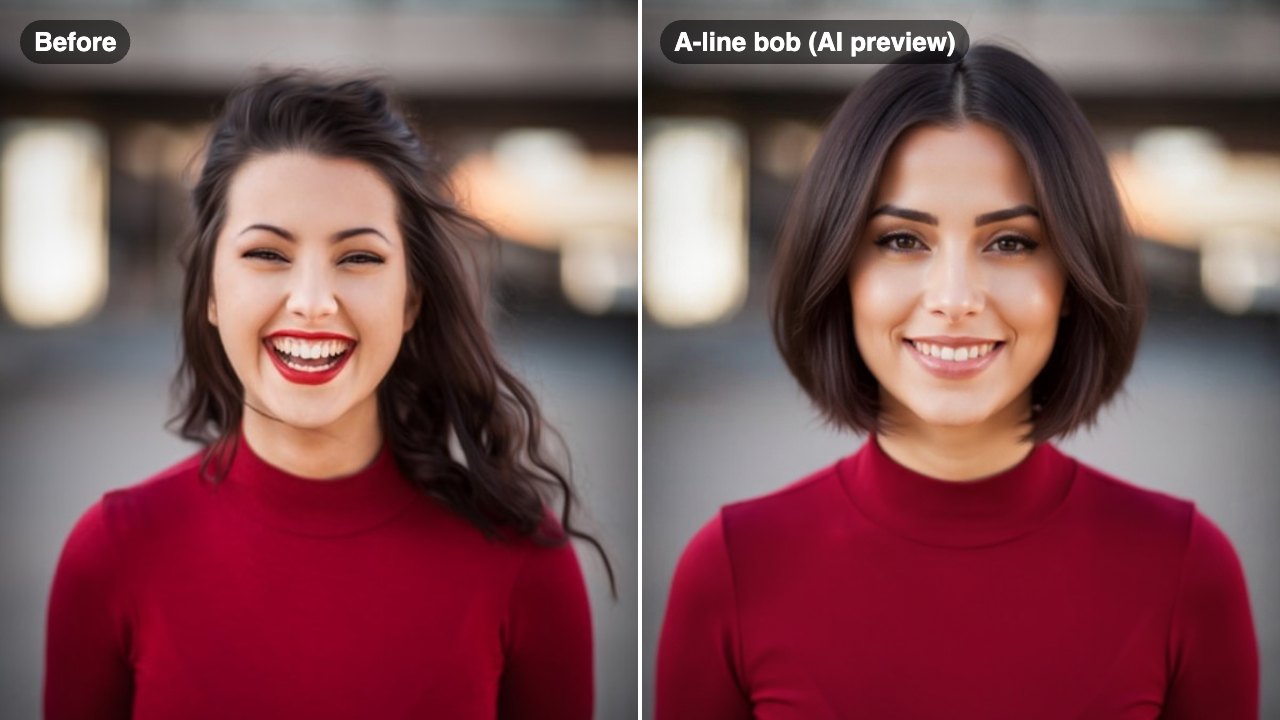
A diamond face has a narrow forehead and chin and wide, high cheekbones. Styles with fullness at the forehead or at chin level balance the cheekbones: a chin-length A-line bob (right), side-swept bangs, or soft layers that start below the cheekbones.
Watch out for: styles that add width exactly at cheekbone level, such as volume at the sides of the face at eye height.
Beyond Face Shape: Hair Type, Upkeep and Taste
Face shape narrows the list. These four things decide which style on that list suits you:
Hair type. Fine hair looks fuller in blunt cuts and bobs; thick hair often needs layers to take weight out. Curly hair shrinks when it dries, so a cut can end up shorter than it looks wet.
Upkeep. A pixie needs a trim every 4 to 6 weeks; long layers can go 3 months. Bangs need the most attention of all.
Daily routine. Be honest about how many minutes you spend on your hair each morning. Waves that need a curling iron every day are not low-maintenance.
Taste. If you love a style that breaks the face-shape rules, try it on first. The rules describe what usually flatters, not what you are allowed to wear.
Same Face, Four Styles: Why Seeing It Beats Guessing
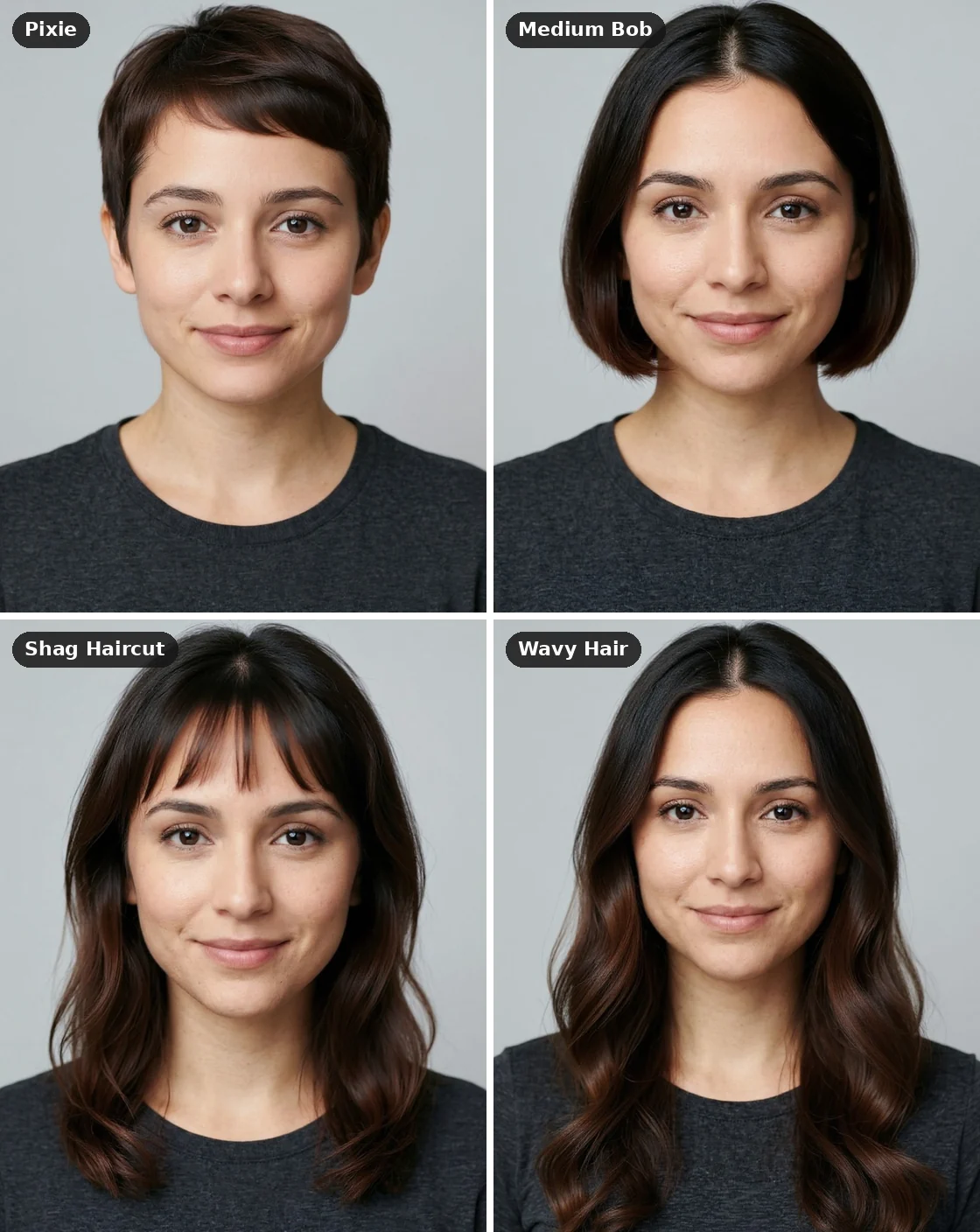
Here is the oval face from above with four different cuts. All four are "right" for an oval face, yet they say very different things: the pixie looks bold and modern, the bob polished, the shag relaxed, the long waves classic. A face-shape chart cannot tell you which of these feels like you. Seeing them side by side can.
How to Find the Hairstyle That Suits You with AI
1. Take the right photo. Face the camera straight on in daylight, with your hair pulled back so the outline of your face is visible. No sunglasses, and no heavy filters.
2. Upload it to the [AI hairstyle changer](/tools/ai-hairstyle-changer) and pick a style: Pixie, A-Line Bob, Medium Bob, Shag Haircut, Wavy Hair, Straight, Spiral Perm, braids or a top bun. Your first try needs no account.
3. Try three or four styles from your face-shape list, plus one wild card you would never pick.
4. Compare them side by side, and look at the whole face, not just the hair: which one makes your eyes and jaw look their best?
5. Take your favorite to your stylist. A screenshot of the preview on your own face explains the cut better than a celebrity photo.
An AI preview shows the shape and length of a cut on your face. It cannot predict exactly how your own hair texture will behave, so ask your stylist whether your hair can hold the style.
Quick Answers: What Hairstyle Suits Me?
How do I know what hairstyle suits me? Find your face shape (above), shortlist the cuts that flatter it, then check them against your hair type and routine. The quickest final check is to try the shortlist on a photo of your own face.
What hairstyle suits a round face? Styles that add length and angles: long hair past the chin, long layers, a deep side part, or an A-line bob that is longer at the front.
What hairstyle suits a long face? Styles that add width: bangs, shoulder-length cuts and layers with volume at the sides.
What is the most flattering haircut for most people? Medium-length layers with a soft side part come closest to working on every face shape, because you can adjust where the volume sits.
Is there a hairstyle quiz? A quiz guesses from your answers. Trying the styles on your own photo with the AI hairstyle changer shows you the actual result.
Can AI tell me which hairstyle suits me? Our tool shows each style on your photo; it does not score your face. You decide which preview you like, which is usually the more reliable judge anyway.
Try Your Shortlist on Your Own Face
You now know your face shape and the cuts that usually flatter it. The last step is the one a chart cannot do: seeing them on you. Upload a selfie to the AI hairstyle changer, try three styles from your list, and book the one you keep coming back to.
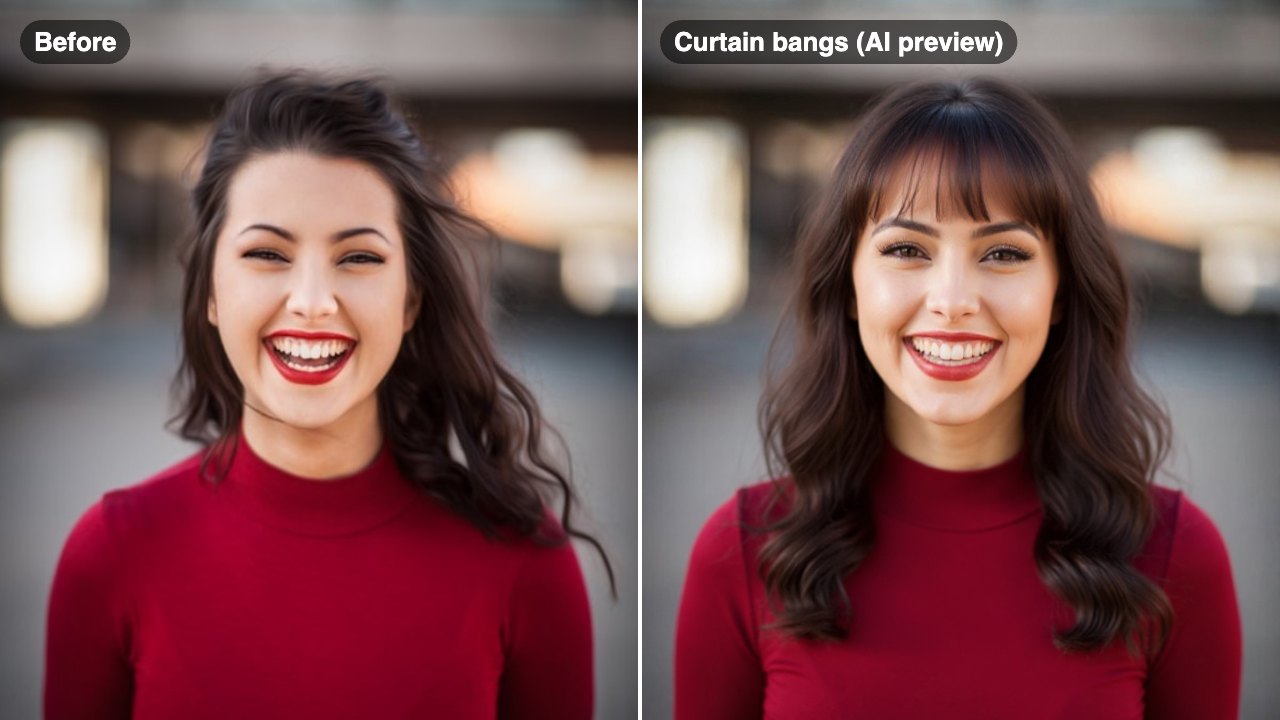
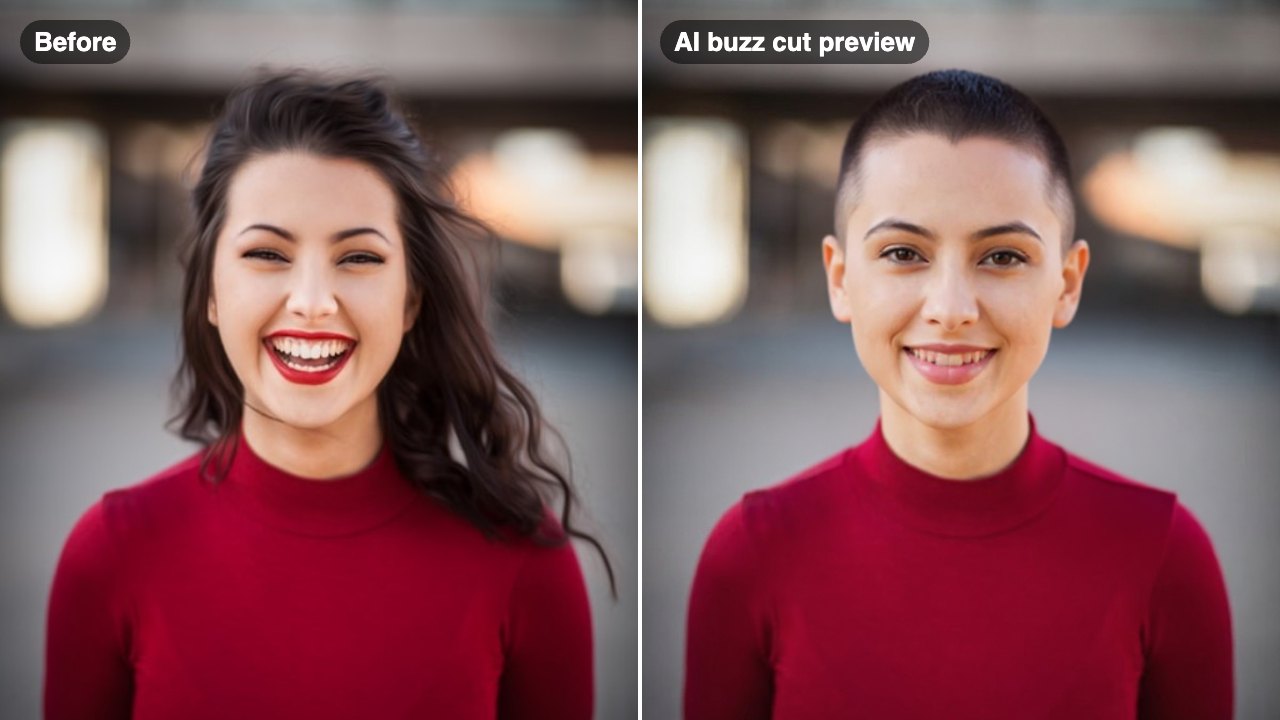
Thinking about something more drastic? See whether a buzz cut would suit you, or compare bangs with your current look first.