how-to脸部与造型
什么眼镜适合我?按脸型挑镜框
The frames that suit you best usually do one simple thing: they contrast with the shape of your face. Angular frames add structure to a soft, round face; round frames soften a strong, square jaw. Get the shape right, then the size, and most of the guesswork is gone.
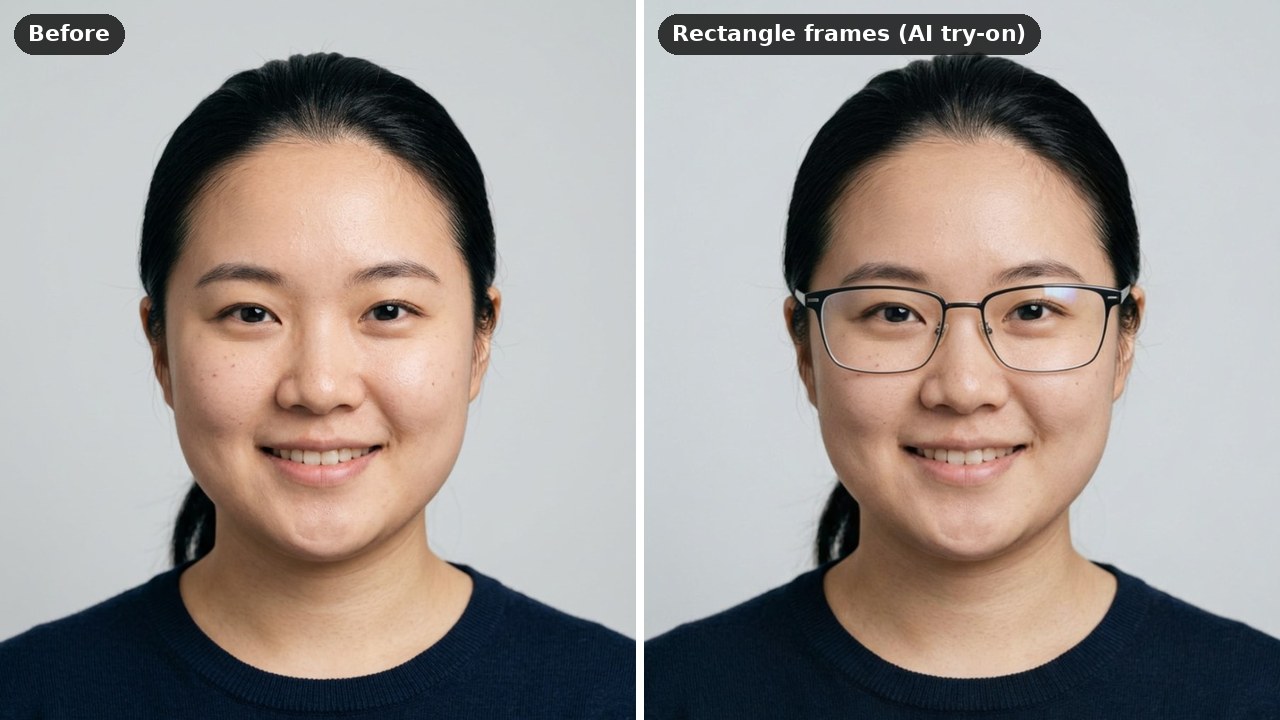
This guide shows you how to find your face shape, the three fit rules that work for everyone, and which frames flatter each of the six common face shapes, with a before and after for each one. The faces are AI-generated example portraits, not real people; the glasses on the right are the real output of our virtual glasses try-on for that photo.
用你自己的照片试试
选一种风格,选一张照片,然后点按钮。 工具页会打开,并直接用这张照片开始生成。
风格
免费试用,出结果后再登录。
Step 1: Find Your Face Shape
Pull your hair back and look straight into a mirror or a selfie. Compare the width of your forehead, cheekbones and jaw, and whether your face is clearly longer than it is wide:
Oval: a little longer than wide, softly rounded jaw.
Round: about as wide as long, full cheeks, soft jaw.
Square: forehead, cheekbones and a strong, angular jaw about the same width.
Heart: wide forehead, narrow or pointed chin.
Long (oblong): clearly longer than wide.
Diamond: narrow forehead and chin, wide cheekbones.
The face shape guide for hairstyles explains each shape in more detail, with photos.
The Three Fit Rules That Work for Every Face
Contrast the shape. Pick frames whose shape is the opposite of your face: angular frames for curved faces, curved frames for angular faces.
Match the width. The frame should be about as wide as the widest part of your face. If the arms bow outward, the frame is too narrow; if there is a gap between your temples and the arms, it is too wide.
Follow the brow line. The top of the frame should sit just below your eyebrows, roughly following their line. Your eyes should sit near the middle of each lens.
Glasses for an Oval Face: Most Frames Work
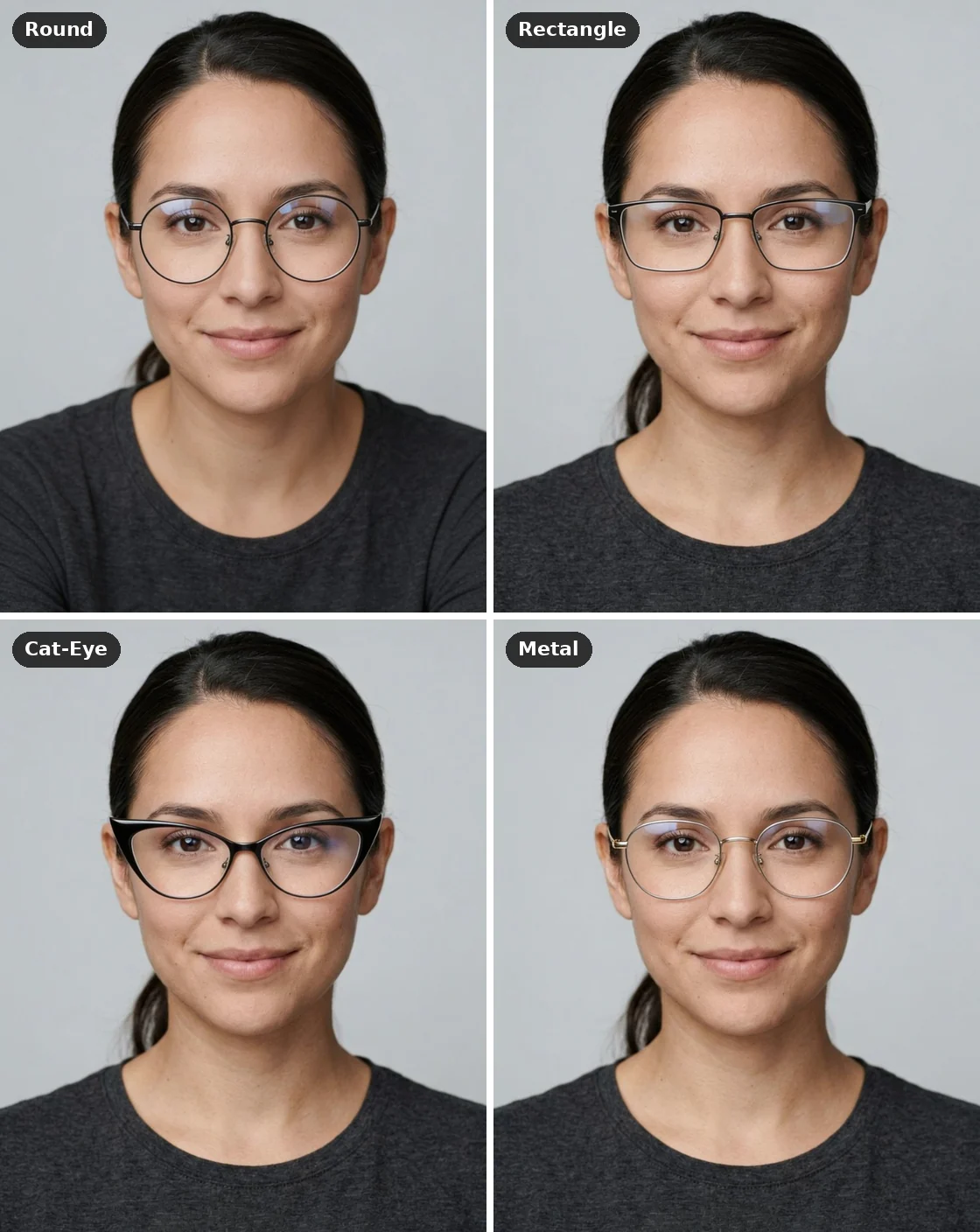
An oval face is balanced, so almost every frame shape works: round, rectangle, cat-eye or thin metal, as the four try-ons above show on the same face. Choose by style rather than by rules. The one thing to check is size: frames that are much wider than your face, or tiny ones, upset the natural balance.
Glasses for a Round Face: Go Angular
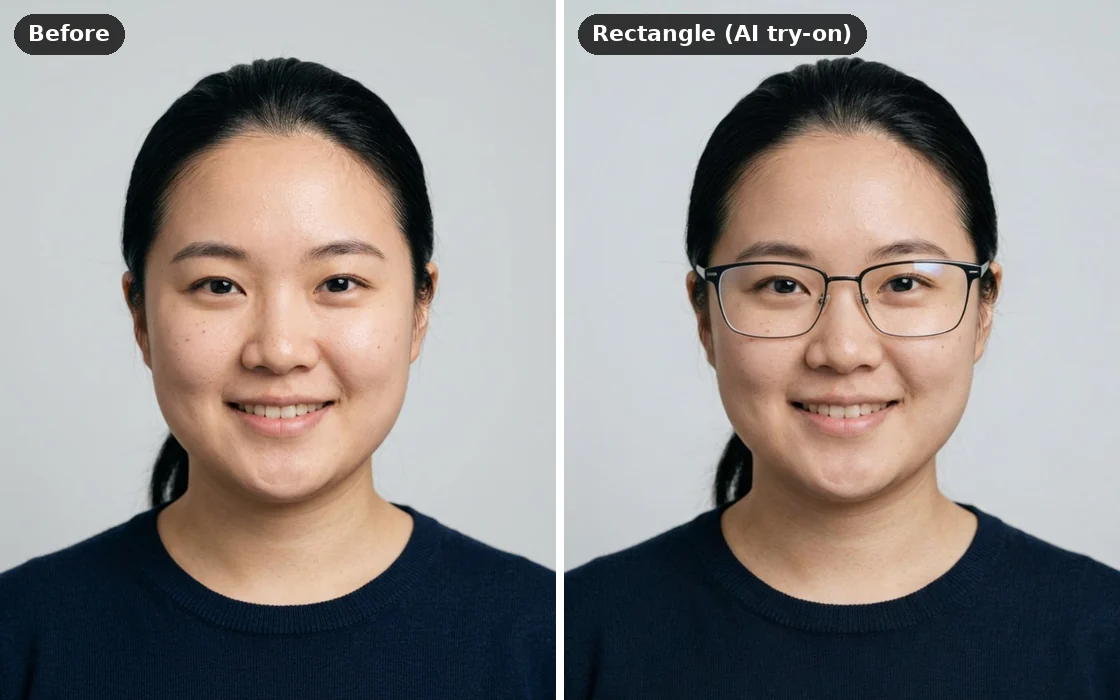
A round face has soft curves and similar width and length, so frames with straight lines and corners add definition: rectangle, square and browline frames, ideally a little wider than they are tall. The thin rectangle frames on the right make the face look longer and more structured.
Avoid: small, round frames, which repeat the curves. For more on this shape, see what frames work for round faces.
Glasses for a Square Face: Soften the Jaw
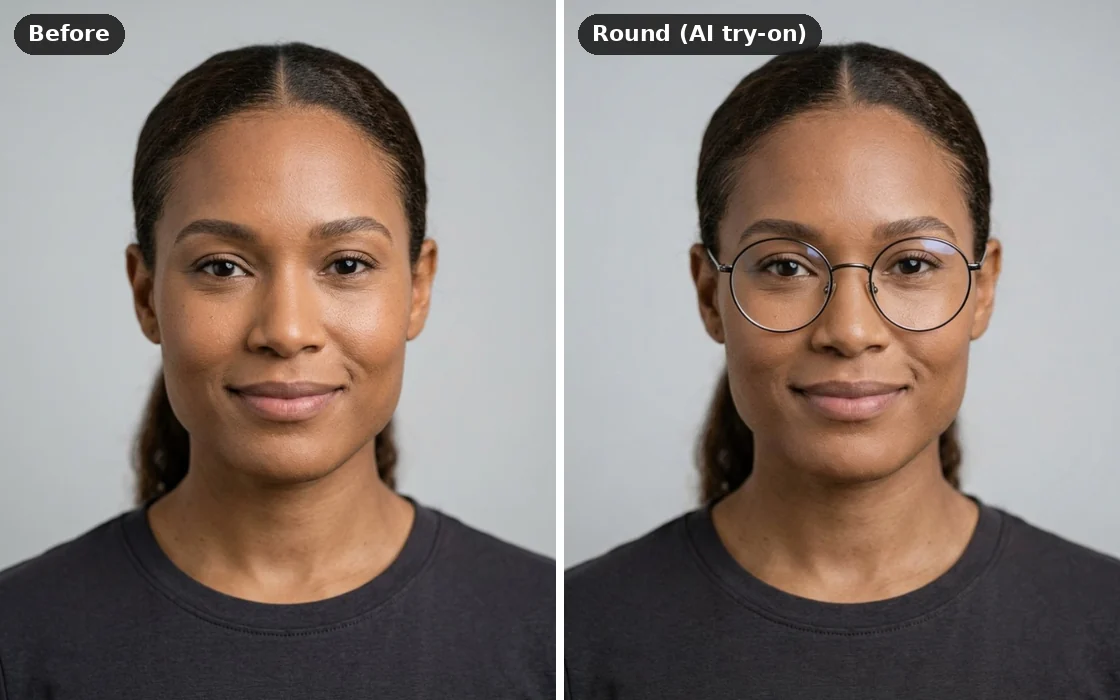
A square face has a strong, angular jaw. Round and oval frames, thin rims and frames that sit slightly higher on the face soften the angles and draw the eye up. The round frames on the right balance the jaw without hiding it.
Avoid: heavy, boxy square frames, which repeat the angles of the jaw.
Glasses for a Heart-Shaped Face: Keep the Top Light
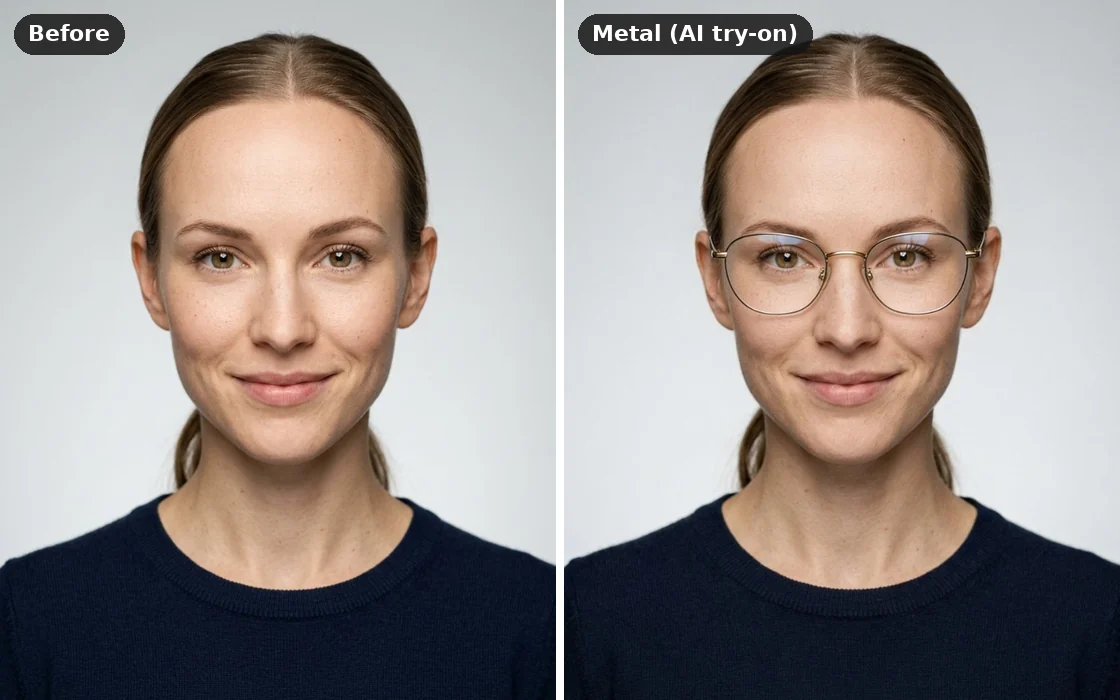
A heart-shaped face is widest at the forehead and narrows to the chin. Light frames balance it: thin metal, rimless or semi-rimless frames, round or oval lenses, and frames that are slightly wider at the bottom than at the top. The thin metal frames on the right keep the eye on the middle of the face.
Avoid: heavy browlines, decorated tops and strong cat-eyes, which add width where the face is already widest.
Glasses for a Long Face: Choose Deep Frames
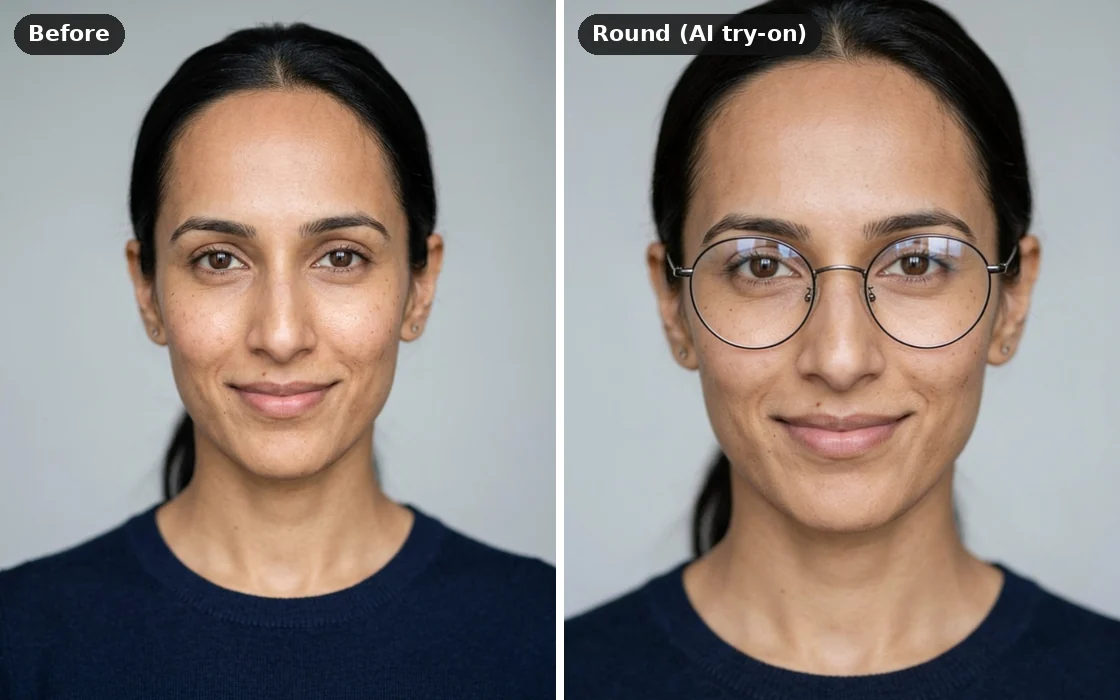
A long face is clearly longer than it is wide, so you want frames that add width and break up the length: deep (tall) lenses, frames that are as wide as or a little wider than your face, and arms with some detail at the sides. The deep round frames on the right do both.
Avoid: narrow, shallow frames, which make the face look even longer.
Glasses for a Diamond Face: Highlight the Brow Line
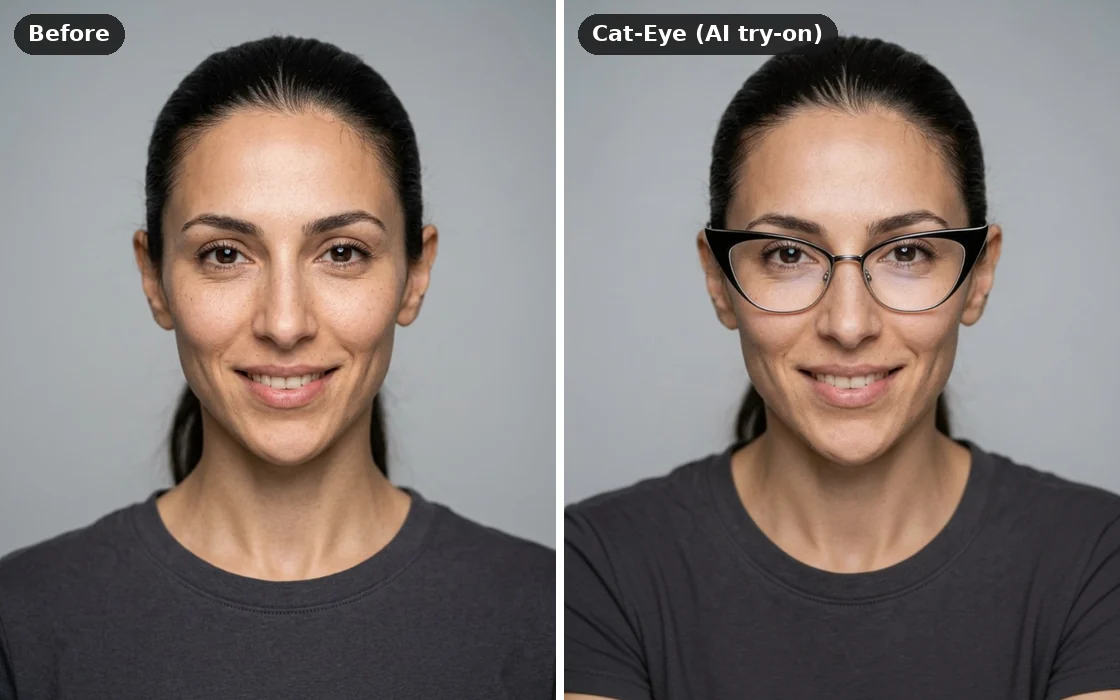
A diamond face has a narrow forehead and chin and wide cheekbones. Frames that are wider at the top balance it: cat-eye, browline and oval frames, or rimless styles. The cat-eye frames on the right widen the brow line so the cheekbones no longer dominate.
Avoid: narrow frames that sit inside the cheekbones, which make the cheekbones look wider still.
Beyond Face Shape: Color, Hair and Prescription
Color. Warm skin tones usually suit tortoiseshell, gold, brown and warm reds; cool skin tones suit black, silver, grey and blue. Clear and thin metal frames suit almost everyone.
Hair and brows. Strong, dark brows can carry a heavy frame; light brows often look better with a lighter or thinner one.
Prescription. A strong prescription makes thick lenses, and larger lenses show more of that thickness. Ask your optician which lens sizes work for your prescription before you fall in love with oversized frames.
How to Try Glasses On Your Own Photo
1. Take a straight-on photo in daylight, with your hair off your face and no glasses on.
2. Upload it to the [virtual glasses try-on](/tools/virtual-try-on-glasses) and pick a frame style: Round, Square, Rectangle, Cat-Eye or Metal. Your first try needs no account.
3. Try the styles from your face-shape list, plus one you would never pick.
4. Compare them side by side and look at the whole face: which one makes your eyes the focus?
5. Take the winner to the shop. Use the preview to choose the style, then check the real frame's size on your face.
The try-on shows a frame style on your face. It is not a specific brand's model and does not measure fit, so check the frame size before you buy.
Quick Answers: What Glasses Suit My Face?
How do I know what glasses suit my face? Find your face shape, choose frames whose shape contrasts with it, and check that they are about as wide as your face with the top following your brows. Then try your shortlist on a photo of yourself.
How do I know my frame size? Look inside the arm of glasses that fit you: three numbers such as 52-18-140 give the lens width, the bridge width and the arm length in millimeters. Look for frames within a few millimeters of those numbers.
What glasses suit a round face? Angular ones: rectangle, square and browline frames that are a little wider than they are tall.
Are big glasses flattering? Oversized frames suit oval and long faces best. On small or narrow faces, frames as wide as the face usually look better than bigger ones.
Can I try on glasses online for free? Yes. The virtual glasses try-on puts round, square, rectangle, cat-eye or metal frames on your photo; the first try needs no account.
See Your Next Frames on Your Own Face
You know your face shape and the frames that usually flatter it. The last step is seeing them on you: upload a photo to the virtual glasses try-on, try three styles, and buy the one you keep looking at.
Changing your hair too? See what hairstyle suits your face shape.