how-to脸部与造型
圆脸选眼镜指南:用 AI 虚拟试戴找到最佳镜框
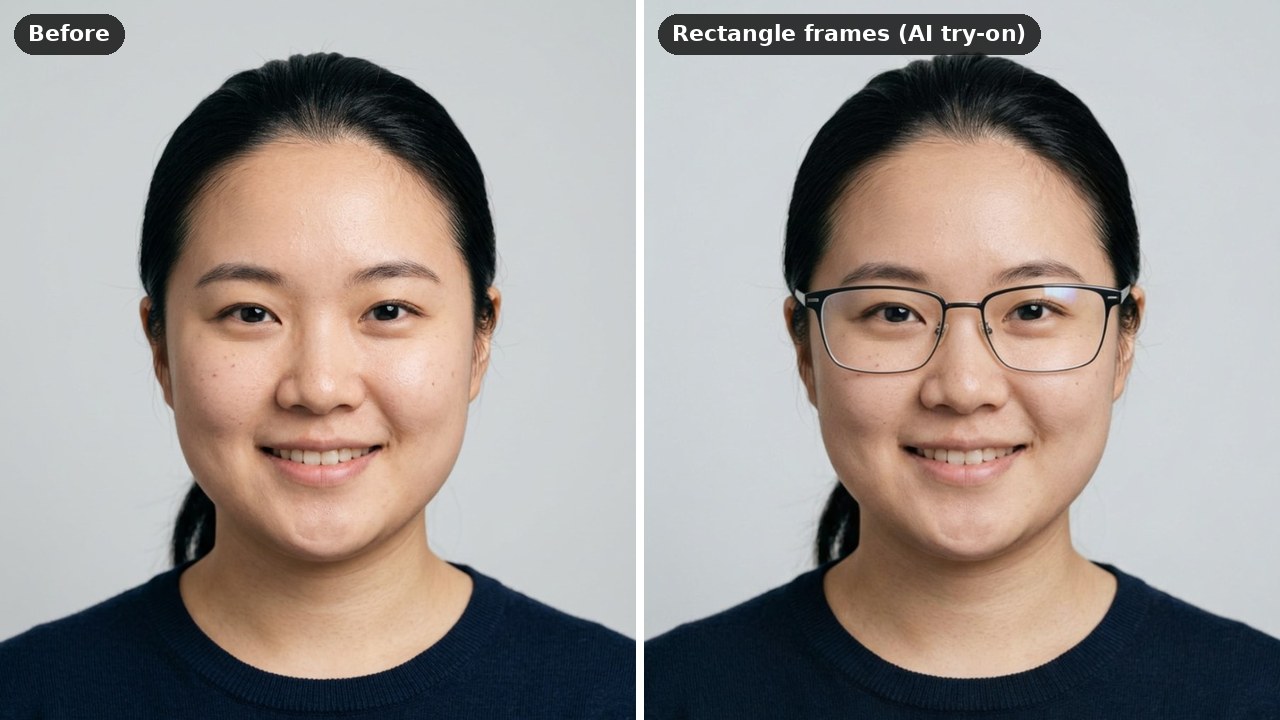
Buying glasses when you have a round face can feel like an endless loop of trying frames that look great on the display rack and terrible on your face. Round faces have soft, curved features with cheeks that are often the widest part of the face, and the wrong frame shape can exaggerate that roundness rather than balance it.
The classic advice is to choose angular frames to contrast your curves, and there is truth to that, but it is far too simplistic. The width of the frame, the height of the lenses, the position of the bridge, and even the color all play a role in whether a specific pair of glasses flatters your round face or fights against it.
What makes glasses shopping especially frustrating is the sheer number of options. Walk into any optical shop and you are looking at hundreds of frames. Online retailers have thousands. Trying on even a fraction of them is exhausting, and most people end up choosing something safe rather than something great.
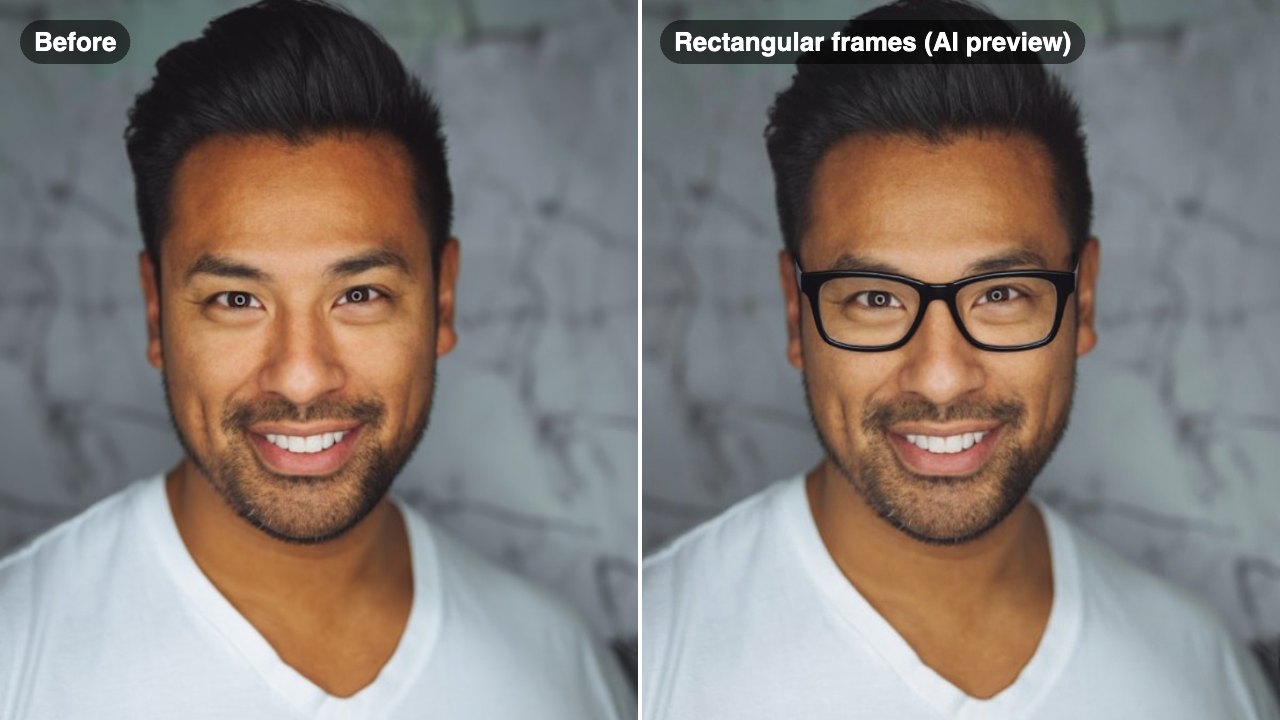
Virtual try-on tools have fundamentally changed this process. Instead of physically handling dozens of frames, you upload a photo and preview frame styles on your actual face in about half a minute. For round faces especially, this is a game-changer because the proportional effect of a frame is hard to predict until you see it on your specific face.
In this guide, we will cover the frame styles that work best for round faces, explain the principles behind why they work, walk through common mistakes to avoid, and show you exactly how to use a virtual try-on tool to find your perfect pair without the guesswork.
用你自己的照片试试
选一种风格,选一张照片,然后点按钮。 工具页会打开,并直接用这张照片开始生成。
风格
免费试用,出结果后再登录。
The Best Frame Shapes for Round Faces
The fundamental principle for round faces is contrast: you want frames that introduce angles, lines, and structure that your face naturally lacks. Here are the frame shapes that do this most effectively.
Rectangular Frames. The go-to recommendation for round faces, and for good reason. Rectangular frames add horizontal definition and sharp angles that create visual contrast with your soft curves. They make the face appear slimmer and longer. Look for frames where the width is noticeably greater than the height for maximum effect.
Square Frames. Similar to rectangular but with a more balanced height-to-width ratio. Square frames add strong angular definition without being as narrow as rectangles. They work particularly well if your round face is also shorter, as they add structure without elongating excessively.
Browline Frames. Also known as clubmaster style. These frames have a bold upper rim and a thinner lower rim, which draws attention upward and adds definition to the brow area. On round faces, this creates an angular focal point at the top of the frame that counterbalances the soft cheeks below.
Geometric Frames. Hexagonal, octagonal, and other geometric shapes are trending and they work surprisingly well on round faces. The multiple angles create interesting visual contrast while still being softer than sharp rectangles. They add personality and edge to soft features.
Cat-Eye Frames. The upswept corners of cat-eye frames add lift and angularity that is extremely flattering on round faces. They draw the eye upward and outward, creating the illusion of more defined cheekbones and a more sculpted face.
Wayfarer Style. The trapezoidal shape of wayfarers, wider at the top and narrowing toward the bottom, provides angular contrast while being universally flattering. They work on almost every face shape but are especially effective on round faces because of the strong upper line.
What to Avoid. Small, perfectly round frames tend to mirror and emphasize the roundness of your face. Oversized circular frames can overwhelm soft features. Very narrow frames can make a round face look wider by contrast. These are not hard rules, but they are patterns worth knowing before you start trying.
Angular vs Round Frames: Breaking Down the Contrast
You have probably heard the advice to avoid round frames if you have a round face. That advice is mostly right, but it deserves a more nuanced explanation because the real issue is not roundness itself, it is the absence of contrast.
Why Contrast Works. Your brain perceives faces as a composition of shapes. When every element is curved, the soft lines, the cheeks, the jawline, and the glasses, the face reads as uniformly round. There is nothing for the eye to latch onto as a focal point. Introducing angular frames creates a visual interruption that makes the face look more dynamic and structured.
The Exception to the Rule. Large round frames, like oversized round spectacles, can actually work on round faces when they are big enough to extend beyond the width of the cheeks. In this case, they are not mirroring the face shape; they are framing it. The key is that the frame must be larger than your face's widest point, which is the cheeks. If the round frame sits within the cheeks' width, it blends in and emphasizes roundness.
Frame Width Is Critical. Whatever shape you choose, the frame should be as wide as or slightly wider than the widest part of your face. A frame that is narrower than your cheeks makes your face look wider by comparison. A frame that matches or exceeds your cheek width creates a visual boundary that defines your proportions.
Bridge Width and Nose. The bridge of the frame affects how close together your eyes appear. A narrow bridge pushes the lenses closer to center, which can make a round face look wider. A wider bridge or a keyhole bridge creates more space and a more balanced proportion.
Frame Color Considerations. Bold, dark frames like black, tortoiseshell, or deep navy provide more structural definition than light or transparent frames. If your goal is to add angularity and structure to a round face, a darker frame color achieves this more effectively. Lighter frames can work but provide less visual contrast against soft features.
The Weight Factor. Thicker frames make a stronger statement and provide more visual structure, which generally favors round faces. Thin, wire frames are more subtle and may not provide enough contrast to counterbalance soft features.
How to Use Virtual Try-On to Find Your Perfect Frames
Virtual try-on technology lets you shortcut the entire process of finding frames that suit your round face. Here is how to use it effectively.
Step 1: Take a Proper Photo. Face the camera directly in good, even lighting. Remove any existing glasses. Keep your expression neutral and relaxed. The tool needs to see your face shape clearly, so make sure your hair is not covering your cheeks, temples, or jawline. A straight-on photo at eye level is essential; do not angle up or down.
Step 2: Upload Your Photo. Open the Virtual Try-On Glasses tool and upload your image. The AI will map your facial structure, including the distance between your eyes, the width of your face, the position of your ears, and your nose bridge.
Step 3: Start with Recommended Shapes. Based on our guide above, start by trying rectangular, square, and browline frames. These are the highest-probability choices for round faces. Generate a preview for each and save them.
Step 4: Experiment with Unexpected Options. After trying the safe choices, go broader. Try geometric frames, cat-eye styles, and even oversized round frames. You might be surprised by what works. Virtual try-on is free, so there is no reason not to explore.
Step 5: Compare Multiple Options. Once you have generated six to eight previews, review them side by side. Look for the frames that make your face look most balanced and defined. Pay attention to which ones make your eyes stand out, which ones create a nice proportion between your cheeks and temple area, and which ones you simply feel good looking at.
Step 6: Narrow to Your Top Three. From your full set of previews, pick your top three. These are the frames you should look for when you shop, whether online or in a physical store. Having a specific target makes the shopping experience dramatically more efficient.
Step 7: Consider Practical Factors. Once you know which styles look best, factor in your daily needs. Do you need frames that fit under helmets or headphones? Do you prefer lightweight options? Will you be wearing them for screen work primarily? Use your visual favorites as a starting point and filter by practical requirements from there.
Find Your Perfect Frames Now
You now know which frame shapes flatter round faces, why contrast is the key principle, and how to evaluate frames on your specific features. The only missing piece is seeing the frames on your actual face.
Our Virtual Try-On Glasses tool lets you upload a photo and preview a wide range of frame styles in about half a minute. No trip to the optician. No awkwardly trying on frames while squinting because you cannot see without your prescription. Just clear, realistic previews of how each frame looks on you.
Here is what we recommend: upload your photo, try five or six different frame styles from our recommended list, and save your favorites. Then take those images with you when you shop for glasses. You will walk into the store knowing exactly what shape and style works instead of starting from zero.
Glasses are something you wear every single day. They deserve more than a rushed decision in a store. See the frames on your face first. Try the Virtual Glasses Try-On now and find frames that genuinely flatter your round face.